
How to Select a Cost-Effective Pain Management Medical Billing Company in Orlando
Expert Medical Billing offers high-quality medical billing, coding, and revenue cycle management. Improve billing efficiency and increase revenue per visit.
May 20, 2026 · 8 min read · Orlando

Pain management practices handle a combination of office visits, diagnostic services, injections, nerve procedures, and advanced interventional treatments. Each service can have different documentation, coding, authorization, and payer requirements.
As a result, even a clinically successful practice can experience delayed reimbursements when its billing workflow is not properly managed.
Practices should evaluate coding knowledge, denial prevention, accounts receivable follow-up, communication, technology compatibility, and reporting. A well-managed billing process can help identify revenue leakage earlier and create a more predictable financial cycle.
Using Electronic Health Records (EHR) effectively can also improve the flow of clinical information from the provider to the billing team, reducing unnecessary gaps between documentation and claim submission.
Why Is Pain Management Billing More Complex Than General Medical Billing?
Pain management combines evaluation and management with highly specialized procedures. One patient may receive an office evaluation, imaging guidance, an injection, or another interventional service as part of a broader treatment plan. The billing team must understand what was performed, why it was medically necessary, and how the documentation supports the submitted claim.
This makes Medical Billing and Coding especially important in pain medicine. A company should understand payer policies, procedure-specific rules, modifiers, diagnosis relationships, authorization requirements, and documentation standards rather than processing every encounter in the same way.
Procedure-Specific Coding Requirements
Pain procedures require close attention to the services documented in the medical record. The American Medical Association describes Current Procedural Terminology (CPT) as the standardized code set used to report medical services and procedures, and the 2026 CPT set contains more than 11,500 codes.
Coding teams also need to understand the relationship between procedures and diagnoses. Knowing the difference between CPT vs. ICD-10 Codes helps practices understand why both the service performed and the patient's condition must be represented correctly on a claim.
Prior Authorization and Medical Necessity
Some pain management procedures can require payer authorization before treatment. The billing workflow should therefore begin before a claim is created. Insurance eligibility, benefit information, authorization requirements, and payer-specific conditions should be checked as early as possible.
An authorization number alone does not guarantee payment. The clinical record still needs to support the service that was actually provided. A strong billing company works with the practice to identify missing information before it turns into a preventable denial.
Documentation for Interventional Pain Procedures
Documentation is particularly important when a practice performs advanced pain procedures. Clinical notes should clearly communicate the patient's condition, previous treatment, procedure performed, relevant findings, and treatment plan.
A properly organized EMR workflow can make this process more efficient. When documentation reaches the billing team quickly, claims can be reviewed and submitted without unnecessary administrative delays.
What Billing Challenges Commonly Affect Pain Management Practices in Orlando?
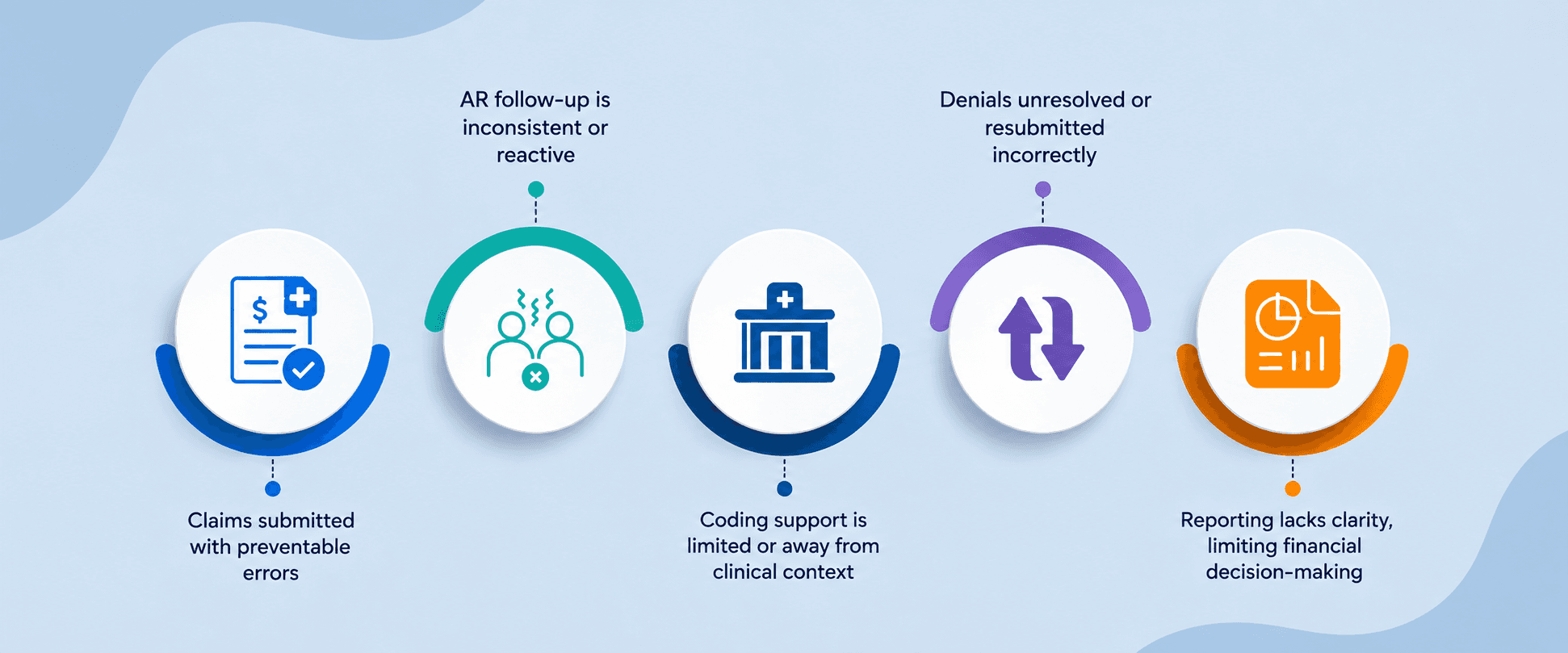
Revenue problems often develop gradually. A practice may initially notice a few delayed claims, but unresolved issues can eventually increase aging A/R and disrupt cash flow. Common causes include incomplete documentation, incorrect patient information, authorization problems, coding inconsistencies, missing modifiers, payer rule changes, and weak denial follow-up.
Another problem is treating all denials as isolated events. A Medical Billing Expert should look for patterns. For example, repeated denials involving one procedure, provider, payer, or authorization type may reveal a workflow problem that can be corrected at its source.
Practices should also pay close attention to data security when billing responsibilities are shared with an outside organization. HHS states that the HIPAA Security Rule requires appropriate administrative, physical, and technical safeguards for electronic protected health information. Understanding HIPAA Rules and Regulations should therefore be part of evaluating any potential billing partner. (HHS.gov)
Which Pain Management Procedures Require Greater Billing Attention?
Not every pain management service carries the same billing complexity. Procedures involving authorization, imaging guidance, multiple anatomical sites, specialized equipment, or detailed medical-necessity requirements deserve additional review before claims are submitted.
Epidural and Joint Injections
Injection-related claims need documentation that accurately reflects the procedure performed and the clinical reason for treatment. Details involving anatomical location, diagnosis, procedure type, and other relevant circumstances should remain consistent between the medical record and claim.
Because CPT is routinely updated to reflect changes in clinical practice, an Experienced medical billing team should work from current coding guidance rather than relying on outdated billing habits. The AMA notes that the CPT system is maintained through a physician-led process intended to keep codes clinically meaningful and current.
Nerve Blocks and Radiofrequency Procedures
Nerve blocks and radiofrequency procedures can create billing difficulties when documentation lacks sufficient detail or when payer requirements are overlooked. Billing staff should review applicable coding, diagnosis, authorization, and documentation requirements before submission.
This is where close communication between clinical and billing teams becomes valuable. Instead of discovering a documentation problem after receiving a denial, the practice can address recurring issues earlier in its workflow.
Spinal Cord Stimulation and Other Advanced Treatments
Advanced interventions can involve several financial checkpoints, including benefits verification, authorization, documentation review, coding, claim submission, and follow-up. These cases should not simply enter the same workflow as routine office visits.
A structured process helps the practice understand the financial status of complex cases from the beginning and reduces the risk of expensive services becoming unresolved receivables.
How Can Better Billing Reduce Denials and Strengthen Cash Flow?
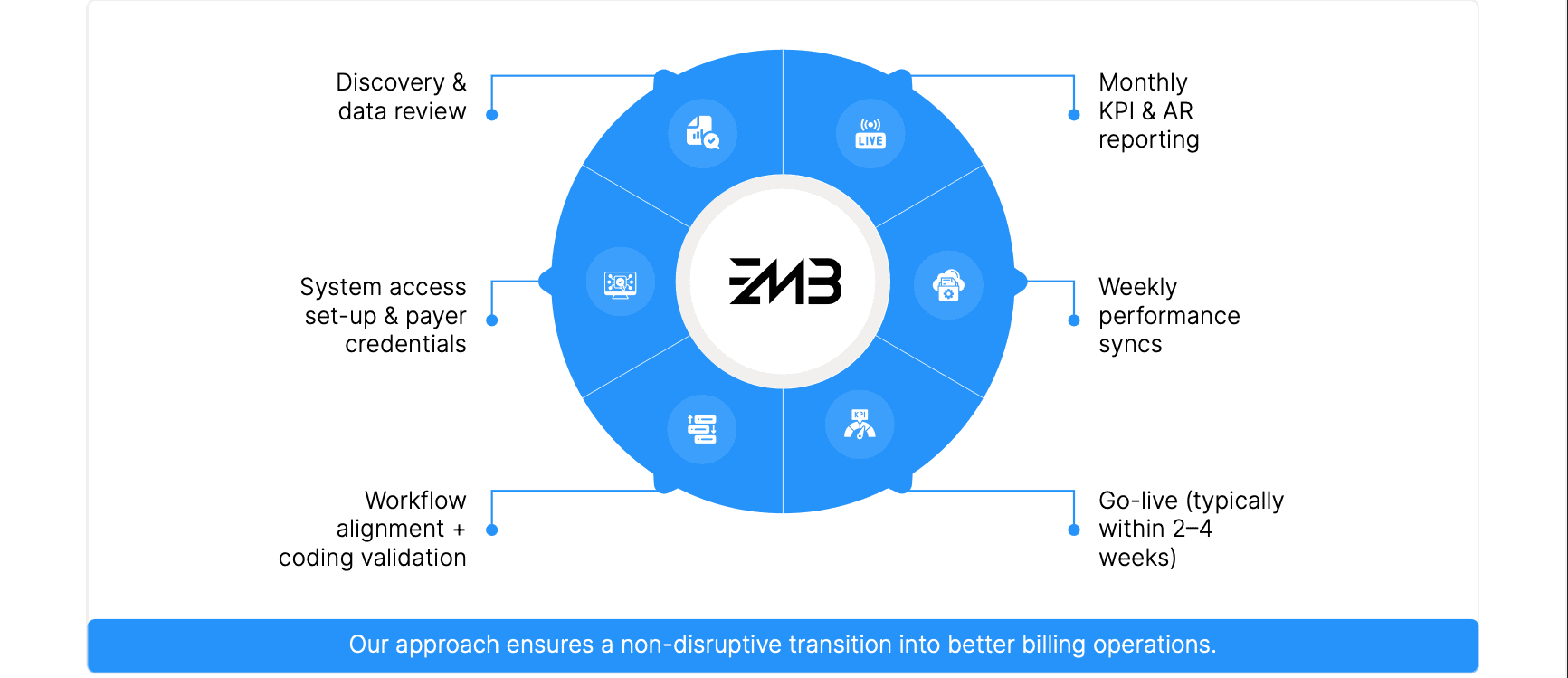
A well-organized Revenue Cycle Management process connects these stages. Instead of viewing scheduling, coding, claims, denials, payments, and A/R as separate activities, RCM uses information from each stage to improve the next one.
Denial data can be particularly useful. If reports show repeated problems involving a specific payer or service, the practice can adjust its front-end or documentation workflow. That moves billing from reactive claim correction toward prevention and creates a stronger foundation for predictable collections.
Why Choose Expert Medical Billing for Your Orlando Pain Management Practice?
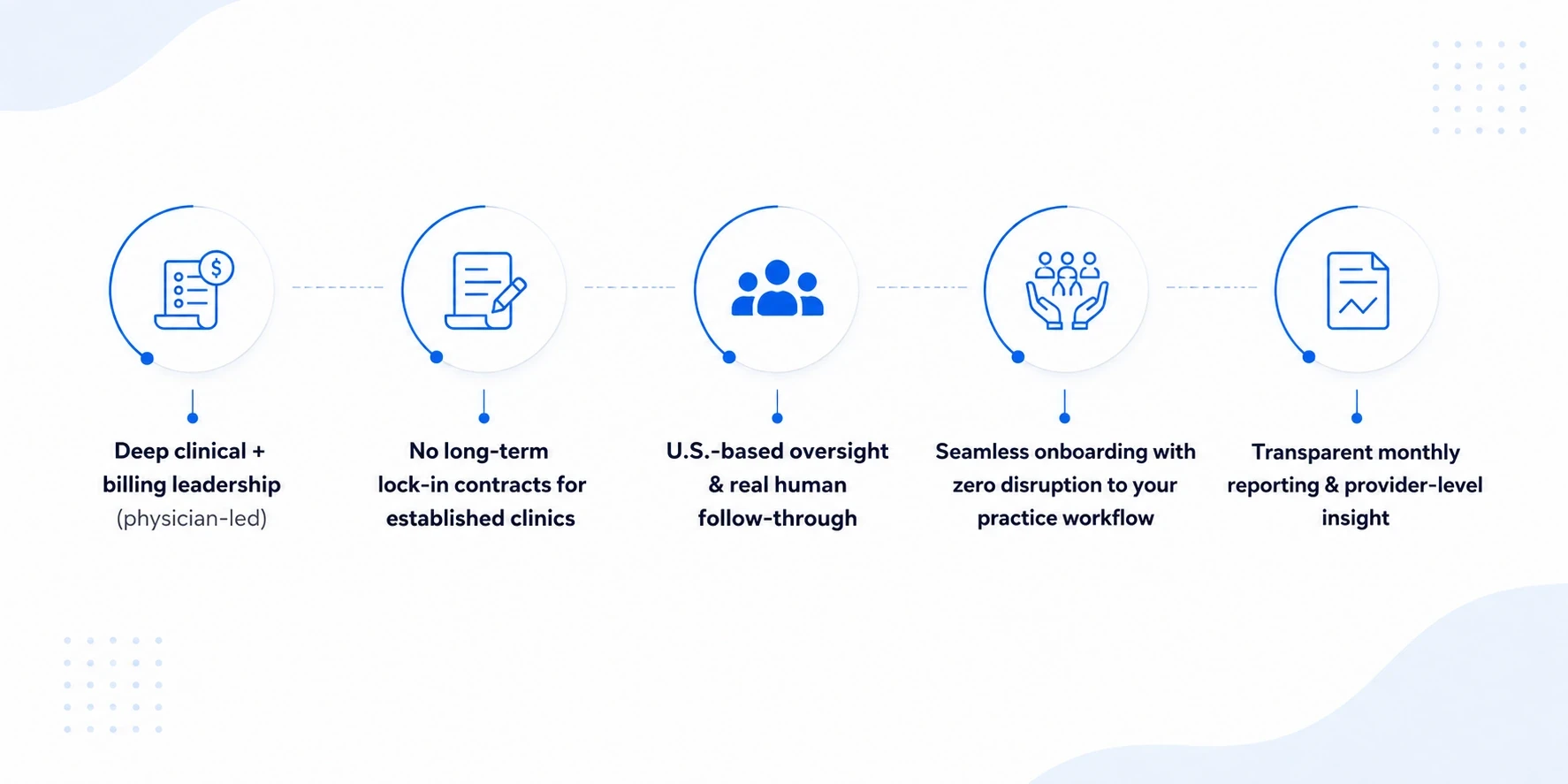
A billing relationship should give physicians better financial visibility without creating another layer of administrative work. Expert Medical Billing can support practices by combining day-to-day claim management with structured follow-up and reporting.
For an Orlando pain practice comparing vendors, the important question is whether the company understands specialty workflows and can communicate clearly about what is happening with the practice's revenue. Working with a Medical billing expert can be particularly valuable when internal employees are spending significant time researching denials, payer requirements, and aging claims.
Specialty-Focused Billing Support
Pain management requires more than general claim submission. The billing team needs to understand how procedures, diagnoses, documentation, authorizations, and payer requirements interact.
The AMA explains that CPT provides a uniform language for reporting services across physicians, payers, and other healthcare stakeholders. (American Medical Association) That standardization makes accurate coding essential, but each practice still needs workflows that correctly translate its clinical services into billable claims.
Active Denial and A/R Follow-Up
A/R management should prioritize claims according to age, value, payer, denial reason, and likelihood of recovery. Older balances should not simply remain on reports month after month.
A proactive team investigates why payment has not been received, takes the appropriate next action, and records the outcome. Over time, this approach can also reveal recurring problems that deserve attention earlier in the billing cycle.
Clear Revenue Cycle Visibility
Practice owners need information they can actually use. Reporting should make it easier to understand collections, outstanding receivables, denial activity, payer trends, and other important performance indicators.
Financial reporting also gives administrators a clearer basis for comparing performance over time. Instead of relying only on the amount deposited each month, management can see where revenue is moving slowly and where workflow improvements may be needed.
What Are the Financial Benefits of Outsourcing Pain Management Billing?
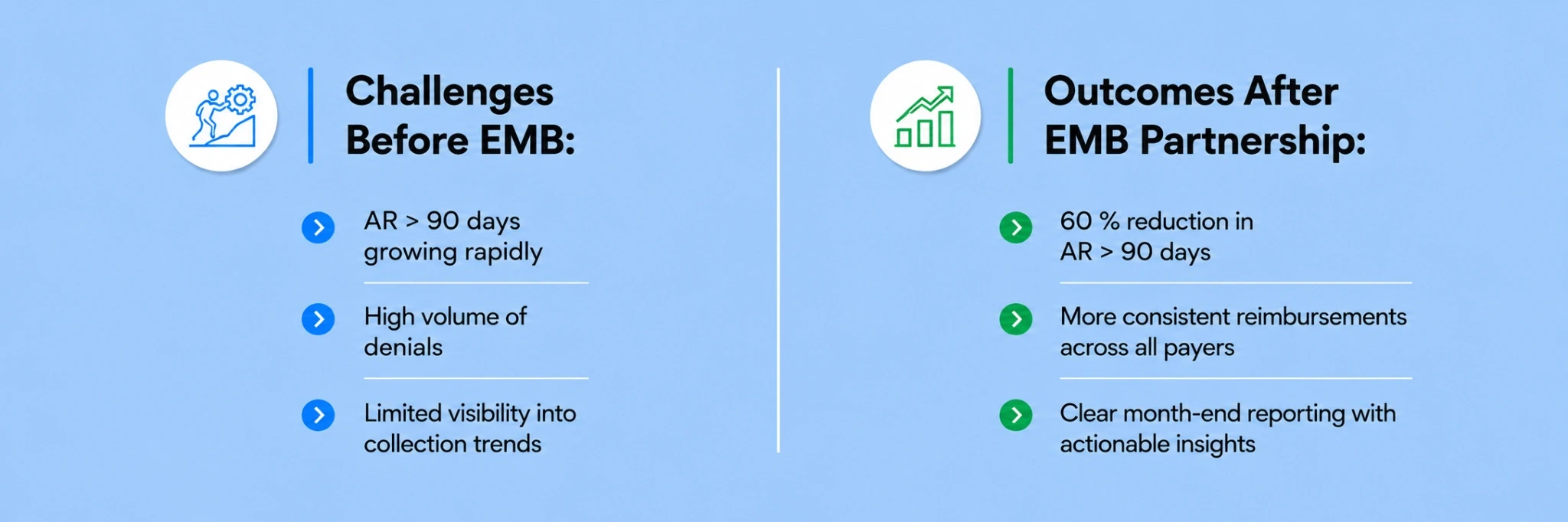
Maintaining an internal billing operation can involve salaries, training, management time, software expenses, employee turnover, and continuous education. Outsourcing can convert some of that administrative burden into a more predictable service arrangement.
The financial benefits are not limited to reducing overhead. A specialized partner can provide consistent follow-up when an internal employee is absent, help a growing practice manage higher claim volume, and give providers access to broader billing knowledge without building a larger internal department.
Outsourcing can also allow physicians and office managers to spend less time on payer problems. When billing responsibilities are clearly assigned, the clinical team can focus more of its attention on patients while the billing company handles the financial workflow.
How Does EMB Customer Support Keep Your Billing Process on Track?

Communication is one of the easiest differences to notice between billing companies. Practices should know who to contact when they have a question, how issues are escalated, and how frequently performance is reviewed.
Strong Customer support should provide meaningful answers rather than simply confirming that an issue was received. For example, when collections decline, the practice should be able to understand whether the cause involves claim volume, payer processing, denials, documentation, authorization, or another factor.
Regular communication also helps the billing team understand operational changes within the practice. New providers, procedures, locations, or payer contracts can affect billing, so keeping both teams aligned reduces avoidable surprises.
How Does EMB Pricing Work for Pain Management Practices?
Cost-effective billing does not necessarily mean choosing the lowest percentage or monthly price. Practices should compare what is included in the service and what may carry additional charges. The scope can vary depending on provider count, monthly claim volume, specialty complexity, A/R needs, coding support, and other services requested.
EMB Offers Simple, Transparent, and Value-Driven Pricing Plans
- No hidden fees
- No long-term contract lock-in for established practices
- Cost is aligned with results when you grow, we grow
Before signing an agreement, ask for a clear explanation of the pricing structure and responsibilities of both parties. Determine whether denial follow-up, reporting, payment posting, eligibility work, or older A/R are included in the quoted arrangement.
Pricing should ultimately be evaluated against the entire financial impact. A cheaper company that provides weak follow-up may cost a practice more through unresolved claims than a service with stronger billing controls.
What Do Healthcare Providers Say About Expert Medical Billing?
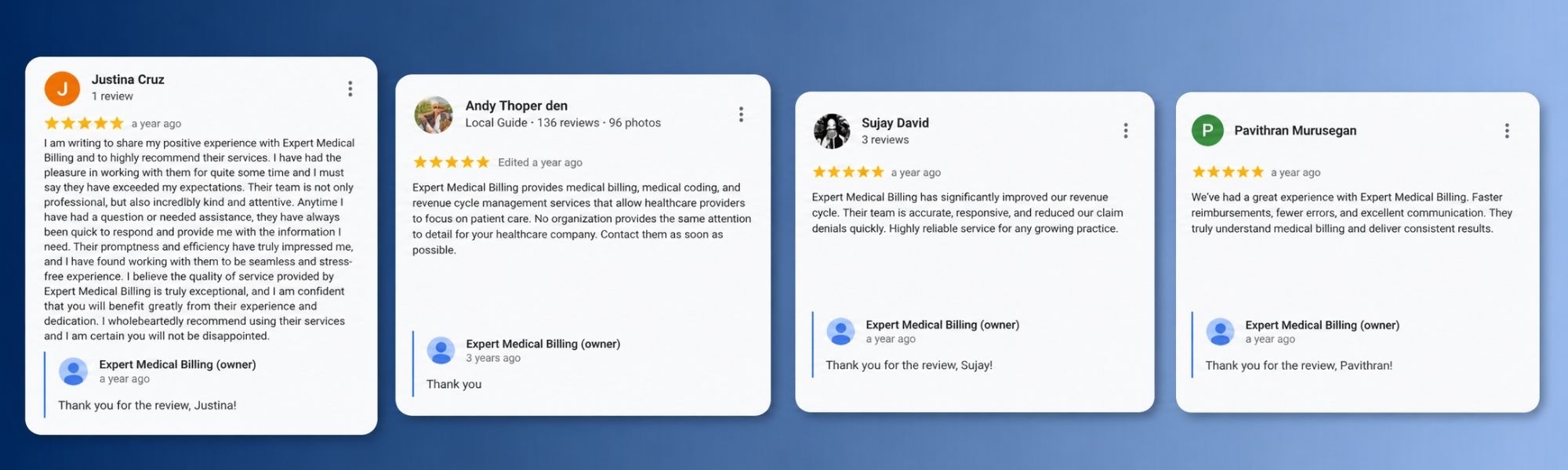
Provider feedback can be useful when evaluating a billing company, but practices should look beyond generic statements about good service. More meaningful testimonials explain the problem a healthcare organization faced, how the billing team responded, and what changed afterward.
When reviewing Expert Medical Billing or another provider, ask for relevant references, verified testimonials, or case studies when available. Pay attention to feedback about responsiveness, reporting, denial management, onboarding, and day-to-day communication rather than relying solely on promotional claims.
A practice should also ask how results are measured. Clear performance reporting and documented trends provide a stronger basis for evaluating a billing relationship than unsupported promises.
Conclusion:
Before making a decision, evaluate the company's specialty experience, communication process, technology compatibility, pricing transparency, security practices, onboarding process, and approach to measuring performance. The right billing relationship should make the financial side of the practice easier to understand and manage while supporting more consistent collections.
For Orlando pain management practices looking to improve billing performance without adding more administrative pressure to their internal team, Expert Medical Billing can be considered as a potential partner for building a more organized and sustainable billing operation.
Wondering what this looks like in your center?
A discovery call is a straightforward conversation about where your revenue cycle stands today and who is accountable for it.