
How to Choose the Best Cardiology Medical Billing Company in Des Plaines
Expert Medical Billing offers high-quality medical billing, coding, and revenue cycle management. Improve billing efficiency and increase revenue per visit.
July 19, 2026 · 7 min read · Des Plaines

Cardiology practices manage some of the most complex services in outpatient and specialty healthcare. A single patient may need consultations, diagnostic testing, cardiac imaging, monitoring, procedures, and long-term follow-up. Each service creates its own documentation, coding, authorization, and reimbursement requirements. When these processes are not coordinated properly, revenue can quickly become tied up in denials or aging accounts.
Choosing the right Cardiology Medical Billing Company in Des Plaines can help a practice create a more reliable financial workflow. The right partner should understand cardiology-specific Medical Billing and Coding, payer requirements, claim follow-up, and Revenue Cycle Management (RCM). More importantly, the billing company should help prevent problems rather than simply responding to them after claims have already been denied.
What Makes Cardiology Billing a High-Risk Area for Revenue Loss?

Cardiology billing carries a higher risk of revenue leakage because practices often provide multiple technical and professional services. Diagnostic tests, office visits, monitoring services, and procedures may have different billing requirements even when they are part of the same patient's treatment.
Small mistakes can have a large financial impact when they affect frequently performed services. For this reason, cardiology practices need a billing process that checks accuracy before submission and follows unresolved claims consistently after submission.
Accurate use of Current Procedural Terminology (CPT) is essential for reporting the services performed. Coding teams must also understand modifiers, component billing, medical necessity, and payer-specific requirements.
Which Billing Problems Put the Most Pressure on Cardiology Practices?
Not every revenue problem begins with incorrect coding. Eligibility errors, missed prior authorizations, incomplete demographic information, delayed charge entry, insufficient documentation, underpayments, and weak accounts receivable follow-up can all affect cash flow.
The connection between CPT vs. ICD-10 Codesis another important area. The procedure reported on a claim should be appropriately supported by the patient's documented diagnosis and medical necessity. Poor alignment can trigger payer questions or denials.
Practices should also watch older unpaid claims closely. As accounts remain unresolved, they become more difficult to collect and may eventually exceed payer filing or appeal deadlines.
How Do Complex Cardiac Procedures Affect Coding and Reimbursement?
Cardiology practices can provide echocardiography, electrocardiograms, Holter monitoring, stress testing, vascular studies, cardiac catheterization, pacemaker-related services, and other advanced procedures. Each service can introduce different documentation and coding considerations.
A qualified Medical billing expert should understand how these services are reported and when modifiers or additional documentation may be necessary. Billers must also distinguish between services provided directly by the physician and technical components that may be billed differently.
Good billing is not about selecting the highest-paying code. It is about accurately translating documented clinical services into compliant claims that insurers can process efficiently.
Why Should Denial Prevention Start Before a Cardiology Claim Is Submitted?
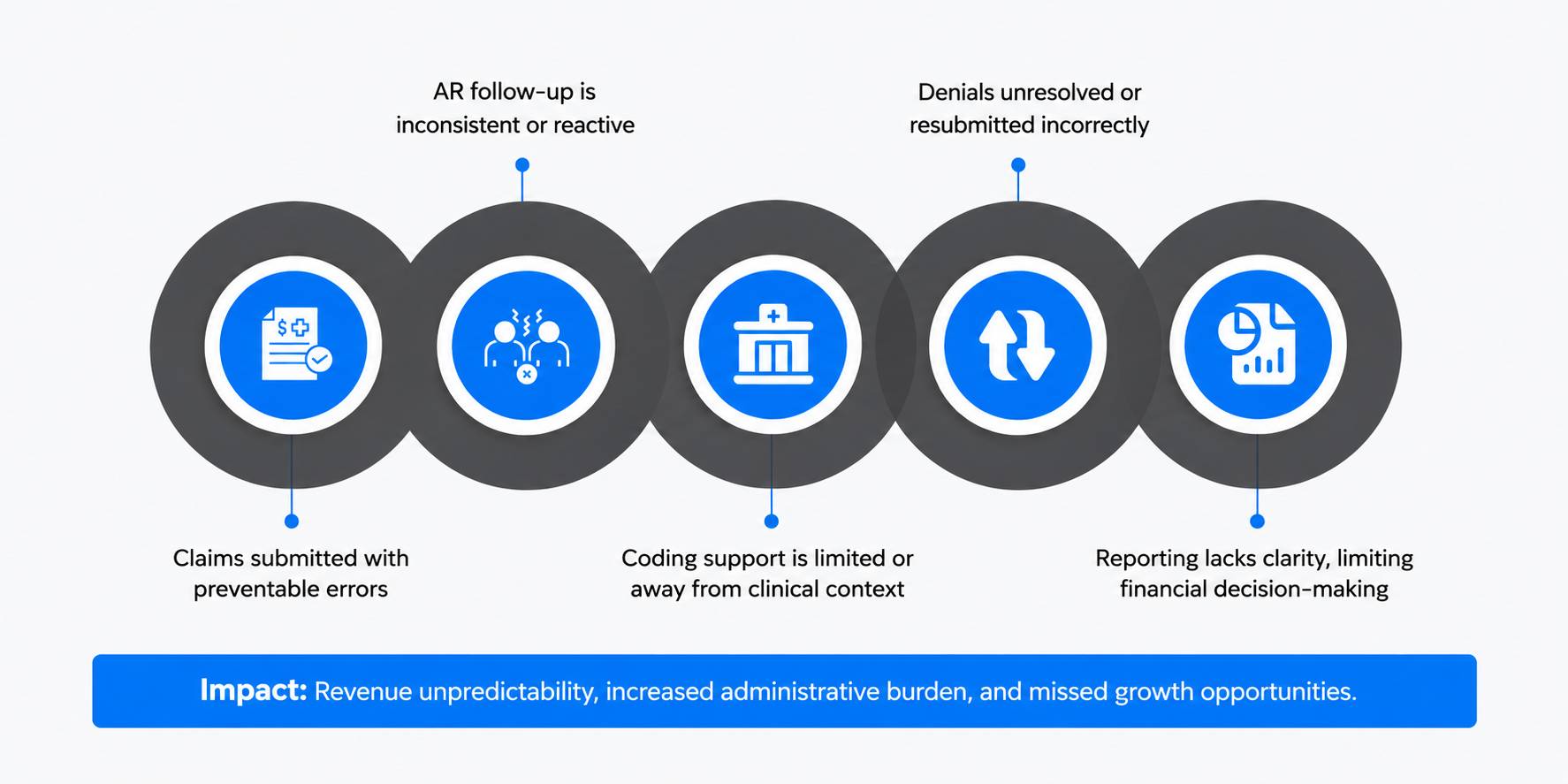
Correcting a denied claim generally requires more administrative work than submitting it correctly the first time. Cardiology practices can therefore benefit from moving denial prevention toward the beginning of the patient and billing workflow.
Insurance eligibility can be checked before appointments, authorization requirements can be confirmed before certain services, and documentation can be reviewed before claims are released. Using well-organized Electronic Health Records (EHR) can further improve access to clinical information when billing teams need to validate a claim.
Practices should also categorize denials by cause. When the same issue occurs repeatedly, fixing the underlying process can be more valuable than repeatedly correcting individual claims.
What Billing Performance Metrics Should Cardiologists Monitor?
Monthly collections alone do not provide enough information to evaluate billing performance. A practice can have strong collections today while simultaneously building a large backlog of unpaid claims that creates financial problems later.
Useful indicators include first-pass claim acceptance, denial trends, days in accounts receivable, aging by payer, payment turnaround, underpayments, and unresolved claim volume. Monitoring Revenue Cycle Management data helps practice leaders identify where revenue is slowing down.
Technology can make this analysis easier. When billing systems communicate effectively with an EMR, providers can gain a clearer connection between clinical activity, submitted charges, and actual reimbursement.
How Can You Compare Cardiology Billing Companies Before Making a Decision?
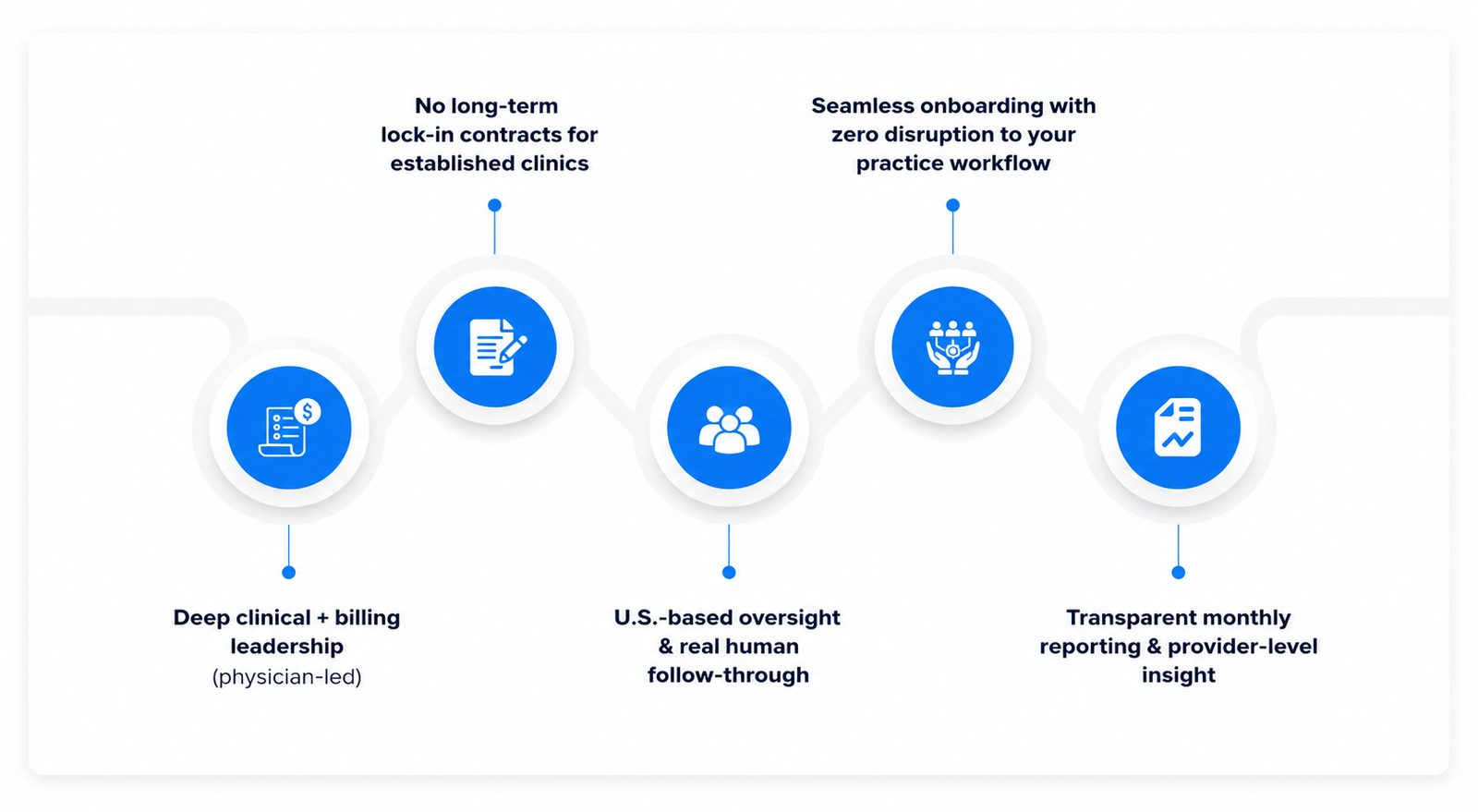
Start by asking potential billing companies about their experience with cardiology rather than healthcare billing in general. A provider should understand cardiac procedures, payer policies, denial management, accounts receivable, reporting, and practice workflows.
Ask how often reports are provided, how old claims are handled, who manages payer follow-up, and how billing questions are escalated. A strong company should be able to explain its process clearly.
Compliance is another important consideration. Because outside billing companies may access protected health information, practices should evaluate security procedures and compliance with applicable HIPAA Rules and Regulations before entering a relationship.
Why Is Expert Medical Billing a Strong Choice for Cardiology Practices in Des Plaines?
Expert Medical Billing (EMB) focuses on creating billing workflows around the needs of individual medical specialties. Cardiology practices can benefit from a process that covers insurance verification, coding review, claim submission, payment posting, denial management, and accounts receivable follow-up.
An efficient medical billing team can examine recurring reimbursement issues rather than treating each unpaid claim as an isolated problem. For example, repeated denials from one payer may reveal an authorization, documentation, or coding workflow that needs attention.
This approach can help cardiology providers in Des Plaines reduce administrative pressure while gaining better visibility into their financial operations.
How Does EMB Customer Support Resolve Day-to-Day Billing Concerns?
Communication becomes especially important when a claim requires additional information or a payer requests documentation. Long response times can unnecessarily extend reimbursement cycles.

Reliable Customer support gives physicians, administrators, and office employees a clear point of communication for claim questions, outstanding balances, denial updates, and payer issues. This can reduce the amount of time internal staff spend contacting insurance companies.
Regular communication also creates accountability. Practice managers can understand what is happening with unpaid claims and what actions are being taken rather than discovering unresolved issues months later.
How Does EMB Structure Pricing for Different Cardiology Practices?
Cardiology practices vary widely. A solo cardiologist providing mainly office-based care may have different billing requirements from a multi-provider group performing diagnostic testing and advanced cardiac procedures.
EMB Offers Simple, Transparent, and Value-Driven Pricing Plans
- No hidden fees
- No long-term contract lock-in for established practices
- Cost is aligned with results when you grow, we grow
EMB can structure billing support according to factors such as provider count, claim volume, service complexity, payer mix, and the scope of assistance required. Practices should therefore compare the services included in a proposal rather than evaluating price alone.
The lowest-cost provider is not necessarily the most economical option if poor follow-up results in preventable denials or uncollected balances. Billing value should be considered in relation to accuracy, communication, reporting, and collection performance.
Can Outsourced Billing Create a More Predictable Revenue Cycle?
Outsourcing can give cardiology practices access to specialized billing resources without having to build and continually train a larger internal department. This can be particularly useful when patient volume increases or payer requirements change.
Consistent claim submission, payment posting, denial follow-up, and accounts receivable management can make cash flow easier to monitor. A well-managed Revenue Cycle Management (RCM) process also allows practices to recognize financial problems earlier instead of waiting until monthly collections decline.
Outsourcing may also allow front-office employees to spend more time on scheduling, patient communication, and administrative tasks directly related to patient care rather than repeatedly following unpaid insurance claims.
What Can Provider Experiences Tell You About Expert Medical Billing?
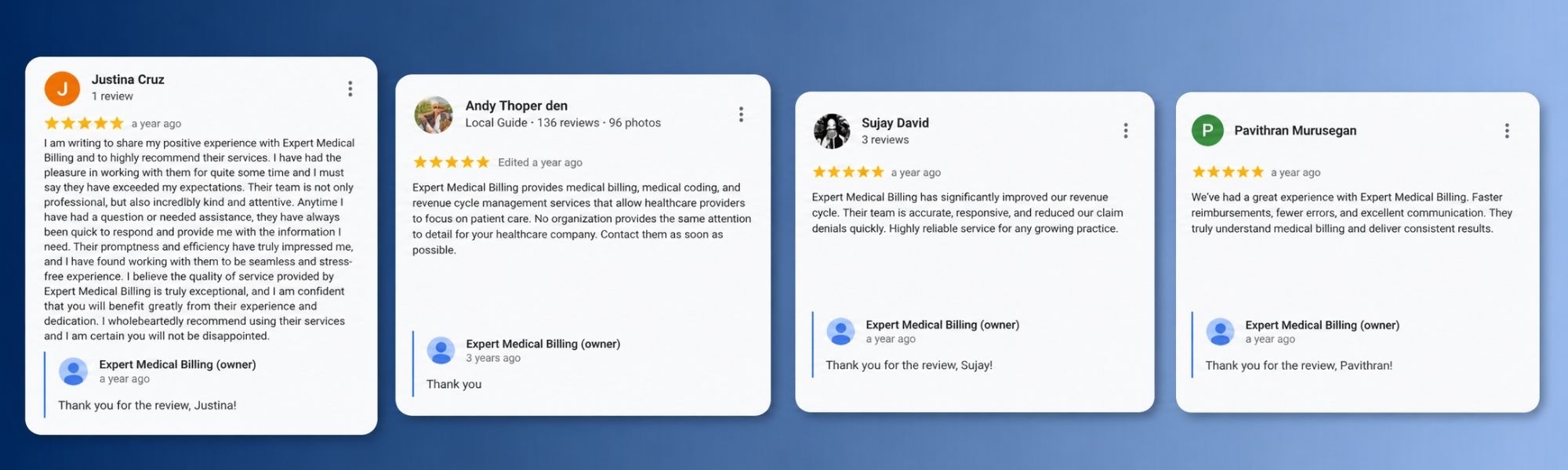
Provider experiences can offer useful insight into how a billing company performs after the contract begins. Practices should look beyond general satisfaction and consider whether the billing relationship improves communication, financial visibility, claim follow-up, and daily workflow.
Healthcare providers working with Expert Medical Billing can benefit from structured monitoring of denials, outstanding balances, and payer activity. Clear reporting can help physicians understand where their revenue stands without requiring them to investigate individual claims themselves.
The most valuable billing relationship is one where the practice understands both its successes and its problems. Transparency makes it easier for physicians and managers to make informed decisions about staffing, services, and future growth.
Conclusion
Choosing the best Cardiology Medical Billing Company in Des Plaines requires careful evaluation of specialty knowledge, technology, communication, compliance, reporting, denial prevention, and accounts receivable management. Cardiology billing is too complex to judge a provider only by how quickly it can submit claims.
Expert Medical Billing offers a specialty-focused approach designed to help cardiology practices build a more organized and dependable reimbursement process. Proactive claim management can reduce administrative pressure while providing greater visibility into outstanding revenue.
For cardiologists in Des Plaines, the right billing partner can help create fewer preventable payment delays, stronger financial oversight, more consistent cash flow, and a more efficient practice that gives providers additional time to focus on patient care.
Wondering what this looks like in your center?
A discovery call is a straightforward conversation about where your revenue cycle stands today and who is accountable for it.